
Diana Taurasi Defends Caitlin Clark? WNBA Legend’s Perspective on Rising Superstar Sparks a Bigger Debate About Respect, Pressure, and the Future of Women’s Basketball
The debate surrounding Caitlin Clark has become one of the most compelling conversations in women's basketball, and now the perspective of one of the sport's greatest legends, Diana Taurasi, is bringing renewed attention to a question that continues to divide fans: Is Clark being judged too harshly for simply playing the game with passion, confidence, and an unwavering desire to win?
For a young superstar whose every performance, reaction, and public appearance attracts enormous attention, the pressure has become almost impossible to escape. Every missed shot can spark criticism. Every emotional reaction can become a social media controversy. And every difficult performance can trigger another debate about whether Clark is living up to the expectations surrounding her remarkable career.
But as those conversations grow louder, Taurasi's experience offers a valuable perspective on what it truly means to compete at the highest level.
The former Phoenix Mercury superstar understands the demands of professional basketball better than almost anyone. Throughout her legendary career, Taurasi faced intense expectations, fierce opponents, and relentless scrutiny while establishing herself as one of the most accomplished players in WNBA history.
Now, as Clark continues navigating her own journey with the Indiana Fever, the contrast between criticism and appreciation has become impossible to ignore.
And at the center of it all is a much bigger question about how women's basketball treats its brightest young stars.

A Young Superstar Under an Extraordinary Spotlight
Since entering the WNBA, Caitlin Clark has carried expectations that extend far beyond ordinary basketball performance.
Her remarkable college career at Iowa transformed her into a national phenomenon, attracting millions of viewers and introducing countless new fans to women's basketball. Her extraordinary shooting range, court vision, competitive personality, and ability to deliver unforgettable moments made her one of the most recognizable athletes in the country.
But that popularity also created a different kind of challenge.
Unlike most young players, Clark entered professional basketball with an enormous audience already watching her every move.
When she succeeds, the praise can be overwhelming. When she struggles, the criticism can arrive just as quickly.
Some observers believe that such scrutiny is simply part of becoming a superstar. Others argue that the intensity of the attention has created unrealistic expectations for a player still developing her professional career.
For Clark, the challenge is not merely performing against the best basketball players in the world. It is also learning how to handle an environment in which virtually every performance becomes a national conversation.
And that is where Taurasi's experience becomes particularly relevant.
Diana Taurasi Knows What It Means to Compete Under Pressure
Few players understand the emotional and physical demands of professional basketball as deeply as Diana Taurasi.
Over a remarkable career, Taurasi built her reputation on fearless competition, extraordinary skill, and an unwillingness to back down from difficult moments.
She became a three-time WNBA champion, a league MVP, and one of the most influential figures in women's basketball history.
Her competitive personality was never an accidental part of her success. It was central to her identity as a player.
Taurasi understood that greatness often requires confidence, resilience, and the willingness to embrace uncomfortable situations.
Those same characteristics are frequently visible in Clark's approach to basketball.
Clark is not a player who hides her emotions. She celebrates big moments, reacts when possessions go wrong, challenges herself to make difficult plays, and competes with the kind of intensity that has helped define her rise.
To supporters, those qualities are exactly what make her special.
To critics, they sometimes become reasons to question her maturity or decision-making.
The difference in interpretation reveals a fascinating contradiction within professional sports: the competitive fire that makes an athlete exciting can also become the very thing that attracts criticism.
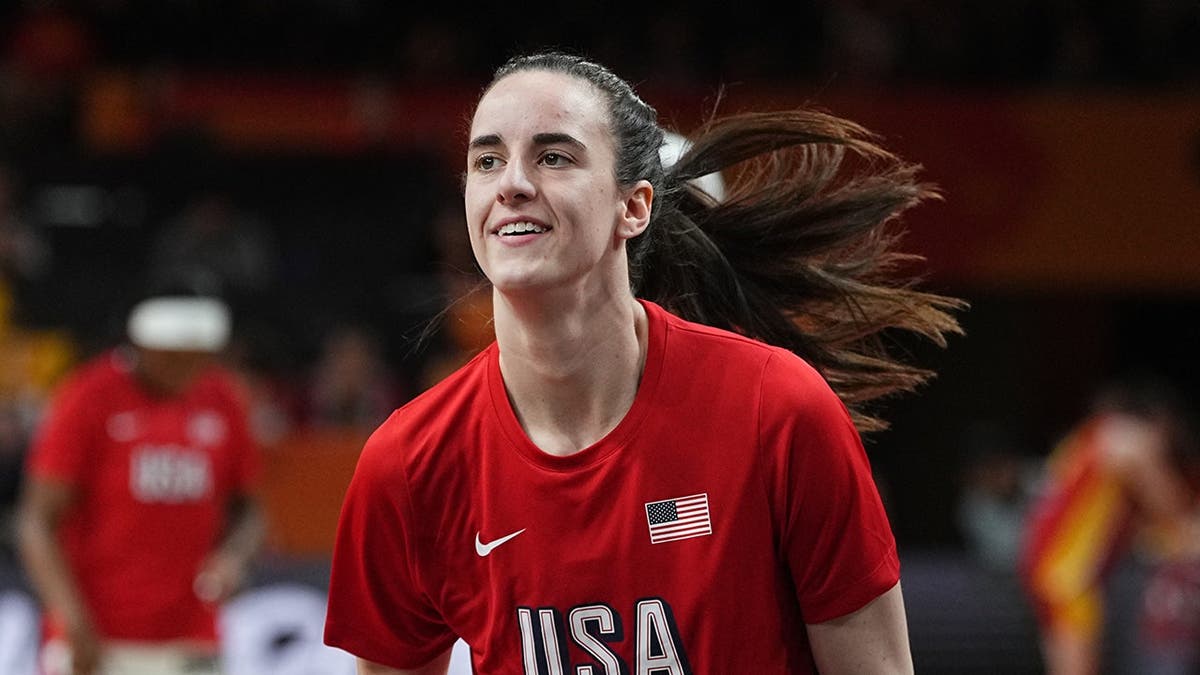
The Conversation About Respect Has Become Bigger Than One Player
At the heart of the current discussion is a simple but important distinction between evaluating an athlete's performance and attacking that athlete personally.
Constructive criticism has always been part of professional sports.
Clark, like every other WNBA player, can reasonably be questioned about shot selection, turnovers, defensive execution, leadership, and consistency.
Those discussions are essential to understanding basketball.
But criticism becomes something different when it moves beyond the court and turns into personal hostility.
For supporters of Clark, that distinction has become increasingly important.
They argue that a young player who has helped attract significant attention to the league should be allowed to experience setbacks without having her character questioned after every difficult game.
Others maintain that Clark's popularity naturally brings increased scrutiny and that her performances should be evaluated by the same demanding standards applied to other high-profile athletes.
Both perspectives reflect the complicated reality of modern professional sports.
The challenge is finding a balance between legitimate accountability and the respect every athlete deserves.
From Controversy to Mutual Respect: How Their Relationship Evolved
One of the most interesting aspects of the relationship between Taurasi and Clark is that it did not begin with universal agreement.
Before Clark entered the WNBA in 2024, Taurasi famously warned that the transition from college basketball to the professional game would present challenges.
Her remarks quickly generated controversy, with some fans interpreting them as criticism of Clark's ability.
Others believed Taurasi was simply explaining the enormous difference between competing against college athletes and facing experienced professionals.
But as Clark began establishing herself in the league, the conversation evolved.
After the Indiana Fever faced the Phoenix Mercury during Clark's rookie season, Taurasi publicly acknowledged the young guard's accomplishments and the remarkable attention she had brought to women's basketball.
In April 2025, the two shared a lighthearted moment during an ESPN broadcast with Sue Bird, joking about Taurasi's earlier comments regarding the realities of professional basketball.
The exchange offered a glimpse of the mutual respect developing between the two stars.
For fans who had once viewed their relationship as a rivalry, it was a reminder that competitive athletes can disagree, challenge one another, and still maintain genuine admiration.
That message became even clearer later in 2025.
Taurasi's Powerful Praise for Clark Revealed What She Truly Admired
During an August 2025 interview with USA TODAY Sports, Taurasi spoke enthusiastically about Clark's influence on women's basketball.
She praised the Indiana Fever star for using her popularity to help advance the sport and recognized the extraordinary level of basketball Clark had already demonstrated.
But what impressed Taurasi most was not simply Clark's fame or her ability to attract enormous audiences.
It was her dedication to basketball.
Taurasi highlighted Clark's love for the game, her work ethic, and the extraordinary standard of performance she had brought to the league.
She also expressed confidence in Clark's ability to influence the WNBA's future.
Those documented remarks provide a much clearer picture of Taurasi's feelings than the unverified quotations circulating in social media posts.
For Clark's supporters, the significance is considerable.
Here is a legendary competitor who understands the sacrifices required to succeed in professional basketball, openly recognizing the talent and commitment of a player from the next generation.
It is not necessarily a demand that Clark should be protected from criticism.
Instead, it suggests that criticism and respect can coexist.
Why Clark's Competitive Personality Deserves a Fair Evaluation
One of Clark's most recognizable qualities is her emotional investment in every possession.
She celebrates successful plays with enthusiasm, reacts visibly to mistakes, and regularly attempts difficult passes and shots that other players might avoid.
Those decisions are not always successful.
Sometimes an ambitious pass becomes a turnover. Sometimes a deep three-point attempt misses its target. Sometimes an emotional reaction creates an unnecessary distraction.
But those moments also reflect the aggressive approach that has made Clark such a compelling player.
Her willingness to take risks has helped produce extraordinary performances, unforgettable highlights, and opportunities for teammates.
The question is not whether Clark should be held accountable for mistakes.
Of course she should.
The more important question is whether her mistakes should overshadow everything else she contributes.
Professional basketball is a demanding environment, and even the greatest players experience difficult stretches.
Taurasi herself built a legendary career without avoiding criticism, setbacks, or disappointing performances.
What distinguished her was the ability to continue competing with confidence.
Clark faces a similar challenge as she builds her own professional legacy.
A League Experiencing Extraordinary Change
Clark's emergence has coincided with a period of significant transformation in women's basketball.
Increased television attention, stronger commercial interest, and growing conversations around the WNBA have created opportunities for athletes across the league.
Clark has played an important role in that expansion, although the growth of women's basketball reflects contributions from generations of players.
Taurasi, Sue Bird, Candace Parker, A'ja Wilson, Breanna Stewart, and many others helped establish the foundation that today's stars continue building upon.
Recognizing Clark's impact does not require diminishing those accomplishments.
Likewise, celebrating the achievements of established WNBA legends should not require questioning the legitimacy of Clark's popularity.
The strongest future for the league is one in which both generations receive recognition.
Veteran stars deserve respect for the standards they established.
Younger players deserve opportunities to create their own identities and elevate the sport in new ways.
That balance becomes especially important when discussions about individual athletes begin overshadowing the basketball itself.
What Clark Can Learn From Taurasi's Legendary Career
Although their playing careers unfolded during different eras, Taurasi and Clark share several recognizable characteristics.
Both developed reputations for exceptional shooting ability, creativity, and competitive intensity.
Both became central figures in conversations about the direction of women's basketball.
And both experienced the pressures associated with being among the most recognizable athletes in their sport.
For Clark, Taurasi's career offers an example of how competitive confidence can be sustained over time.
Taurasi did not become a legend by winning every game or avoiding every difficult moment.
She succeeded through preparation, persistence, adaptability, and the willingness to compete against extraordinary opponents year after year.
That is a valuable lesson for any developing superstar.
Clark's career will ultimately be judged by far more than individual games or temporary controversies.
Her growth as a leader, her ability to adapt to defensive adjustments, her relationships with teammates, and her performances in meaningful moments will all shape her legacy.
Those developments require time.
And time is something that even the most talented young athletes need.
The Bigger Message: Respect the Competition, Not Just the Results
The relationship between Taurasi and Clark illustrates something that can easily become lost in the intensity of modern sports debates.
Respect does not mean refusing to criticize an athlete.
It means recognizing the work, sacrifice, and determination required to compete at the highest level.
Fans can question Clark's decisions without attacking her character.
Analysts can evaluate her performances without reducing her entire career to one difficult game.
And supporters can celebrate her achievements without suggesting that other WNBA players deserve less recognition.
Taurasi's documented praise for Clark reinforces the importance of acknowledging talent across generations.
It also demonstrates that professional respect can develop even after public disagreements.
For Clark, the challenge remains finding ways to improve while navigating extraordinary expectations.
For the WNBA, the opportunity is much larger.
The league has a generation of established stars, emerging talents, and increasingly engaged fans capable of helping women's basketball reach new heights.
The question is whether those conversations will remain focused on competition and achievement or become consumed by unnecessary hostility.
A Final Question That WNBA Fans Cannot Ignore
Diana Taurasi's appreciation for Caitlin Clark is especially meaningful because it comes from someone who has experienced the demands of elite competition firsthand.
The WNBA legend knows that talent alone does not build a lasting career.
Success requires dedication, confidence, resilience, and the ability to withstand pressure.
Clark has already demonstrated many of those qualities, even as she continues learning and evolving.
And while her performances will always invite debate, her passion for basketball deserves to be evaluated in context.
The most important takeaway from Taurasi's perspective may be that women's basketball does not need to choose between celebrating its established legends and embracing its rising stars.
There is room for both.
There is room for accountability and encouragement.
There is room for fierce competition and mutual admiration.
And there is certainly room for Caitlin Clark to continue developing her career without every setback becoming a referendum on her future.
Because ultimately, the question is not whether Caitlin Clark deserves criticism. Every professional athlete does. The question is whether the basketball world can recognize her extraordinary potential while giving her the same opportunity to grow that every great player once needed.
That is a conversation worth having — and one that reaches far beyond a single player, a single season, or a single WNBA rivalry.