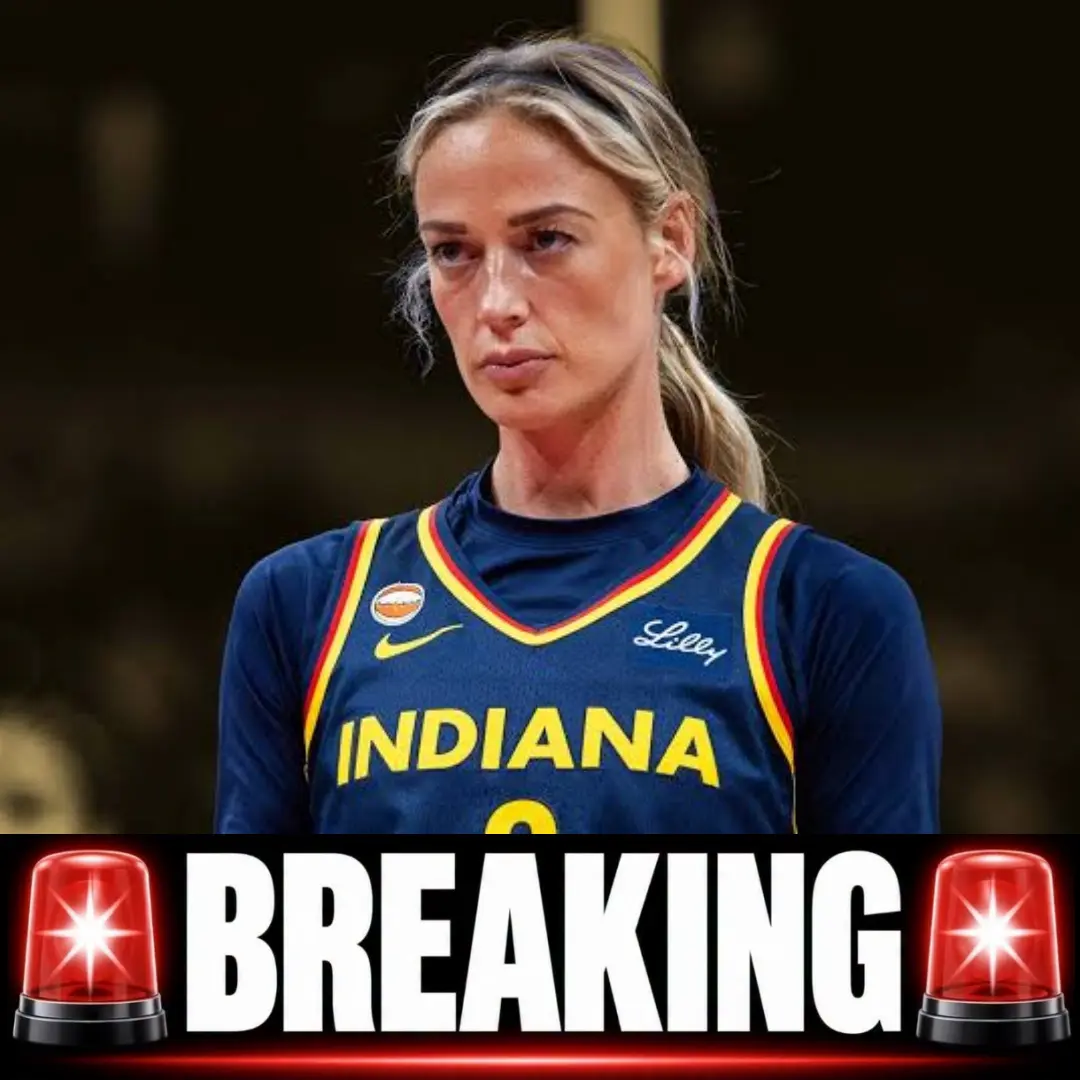
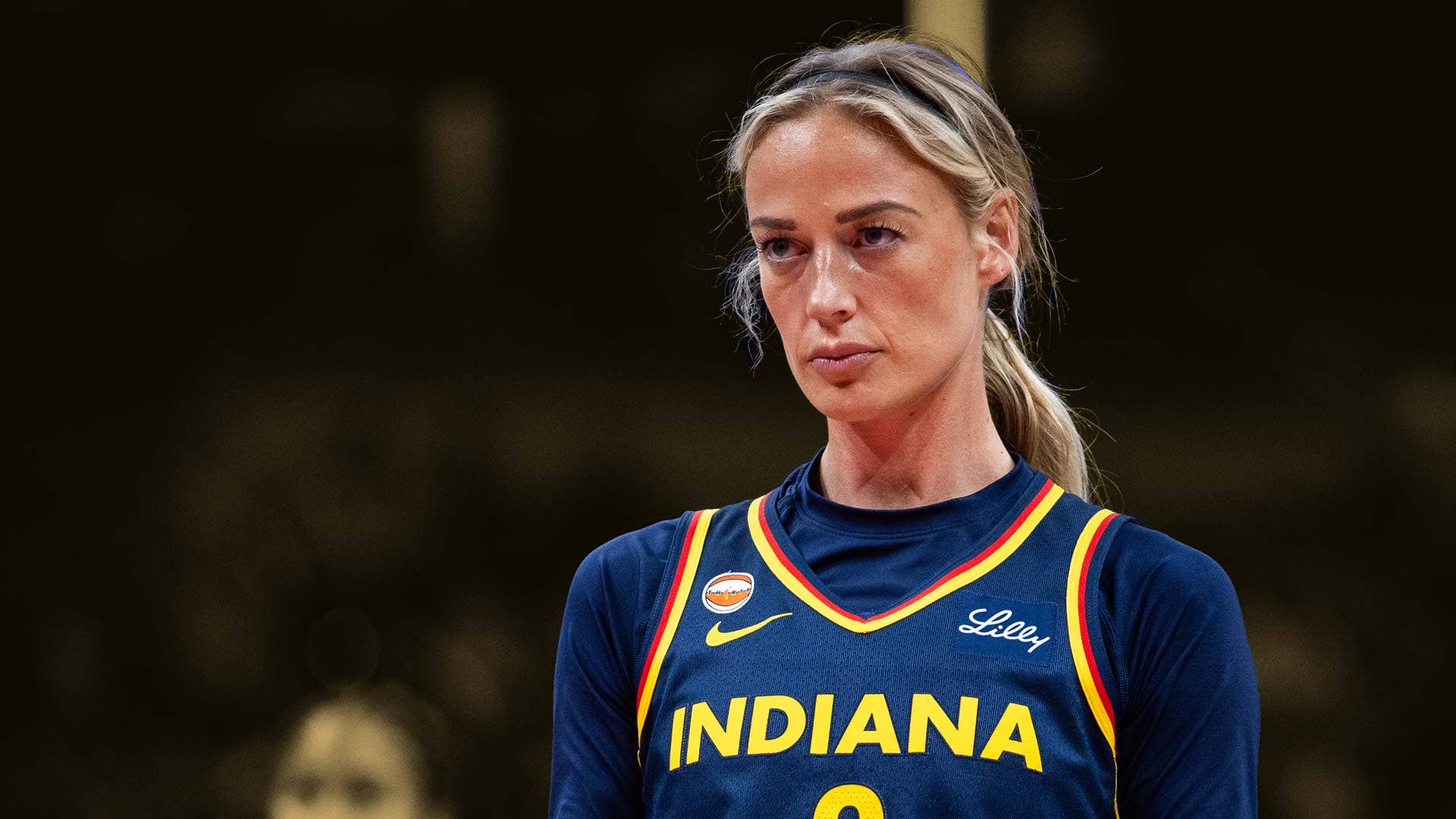
Sophie Cunningham Refuses to Back Down Amid Fierce Debate Over Women's Sports — Controversial Message Sparks Heated Reactions Across the WNBA
The Indiana Fever star finds herself at the center of a divisive conversation about fairness, inclusion, and the future of women's athletics, as a controversial statement attributed to her draws attention across social media.
The debate surrounding women's sports has become one of the most emotionally charged conversations in American athletics, and Indiana Fever guard Sophie Cunningham is now being drawn into the controversy.
A message circulating online claims that Cunningham has refused to retreat from her position despite facing criticism over transgender participation in women's sports. The statement attributed to her reads: "MEN DO NOT BELONG IN WOMEN'S SPORTS!"
However, the authenticity of that quotation and the circumstances in which Cunningham allegedly made it have not been independently verified. The controversy therefore raises two separate questions: what Cunningham has actually said publicly, and why the broader debate continues to generate such strong reactions.
A Controversy That Goes Beyond Basketball
Cunningham has developed a reputation among basketball fans as a passionate, outspoken competitor who brings energy and intensity to the court.
Throughout her WNBA career, she has attracted attention not only for her performances but also for her willingness to express herself.
That reputation helps explain why a statement attributed to her could spread quickly across social media.
The reported message touches on an issue that extends far beyond professional basketball: how sports organizations should balance competitive fairness, athlete safety, inclusion, and the rights of transgender athletes.
Supporters of restrictions on transgender women's participation in female sports categories argue that physiological differences associated with male puberty may create competitive advantages in certain events.
They believe women's sports classifications exist to preserve meaningful competitive opportunities for female athletes and that governing bodies have a responsibility to maintain those protections.
Others argue that transgender athletes deserve fair opportunities to participate and that eligibility decisions should be based on scientific evidence, individual circumstances, and the demands of each sport rather than broad political slogans.
These competing perspectives have turned what was once primarily a discussion among sports administrators into a national political and cultural controversy.
Why Cunningham's Name Draws Attention
Cunningham's public image is closely connected to her competitive personality.
As a player associated with toughness, physical defense, and emotional intensity, she has earned recognition among fans who appreciate athletes willing to stand up for themselves and their teammates.
Her association with the Indiana Fever has also placed her in one of the WNBA's most closely watched environments.
With Caitlin Clark helping bring enormous public attention to Indiana, discussions involving Fever players can quickly reach audiences far beyond traditional women's basketball followers.
That visibility has advantages, including increased recognition and commercial opportunities, but it also means comments attributed to players can become major talking points.
In Cunningham's case, the latest circulating statement has the potential to reinforce her image among supporters who value outspoken athletes.
At the same time, it could create tension with fans who believe public discussions about transgender participation require greater nuance and sensitivity.
The central issue remains whether the statement accurately represents Cunningham's own words.
Without an authenticated interview, official social media post, or reliable recording, the quotation should not be treated as a confirmed public declaration.
Cunningham Makes Her Position Clear
Although the viral slogan has not been established as a verbatim Cunningham quote, her broader position is documented.
In a July 2026 ESPN interview, Cunningham expressed opposition to transgender women participating in women's sports, explaining that she wanted to protect opportunities for girls and female athletes.
When questioned by reporters afterward, she reaffirmed that position rather than distancing herself from the controversy.
She also emphasized that disagreement over sports eligibility should not be confused with hatred toward transgender people.
Her comments quickly attracted national attention, with some political figures praising her and critics arguing that her position could contribute to the exclusion of transgender athletes.
Political Figures Enter the Debate
What began as a sports-related discussion soon attracted attention in Washington.
White House press secretary Karoline Leavitt publicly supported Cunningham's position in July, framing her comments as part of the administration's efforts to preserve female sports categories.
That response transformed Cunningham's remarks into something larger than an individual athlete expressing an opinion.
For supporters, the political recognition represented validation of concerns about competitive fairness.
For critics, it demonstrated how women's basketball could become entangled in political disputes that overshadow the players and their accomplishments.
The controversy intensified further in October, when President Donald Trump discussed Cunningham during a political rally in Ohio.
His remarks drew additional attention to the Fever guard, although some coverage also questioned his emphasis on her appearance rather than her basketball achievements.
Backlash Reaches the Basketball Arena
The reaction was not confined to online arguments.
Demonstrators appeared outside Fever games, while fans expressed opposing positions through signs, chants, and public demonstrations.
Some praised Cunningham for speaking openly about an issue they believed athletes should be able to discuss without fear of retaliation.
Others displayed support for transgender inclusion and argued that women's basketball should remain welcoming to LGBTQ+ communities.
Cunningham maintained that she was not responsible for organizing demonstrations and continued to emphasize her responsibilities as a professional basketball player.
Fever coach Stephanie White also acknowledged the challenges that public controversy could create for a team trying to remain focused on competition.
The Larger Question Facing Women's Sports
The disagreement surrounding Cunningham reflects an unresolved challenge for sports governing bodies.
Different sports involve different physical demands, and policies concerning eligibility, testosterone, puberty, and competitive classifications vary across organizations.
Advocates of se.x-based eligibility restrictions argue that certain physiological advantages may persist after medical transition.
Advocates of transgender inclusion contend that sweeping exclusions can unfairly penalize a small population of athletes and undermine the benefits of participation in sports.
The debate also extends beyond elite competition into schools, recreational leagues, and youth athletics, where participation, personal development, and community involvement are important considerations.
International sporting organizations have increasingly examined eligibility rules, while human rights advocates continue questioning whether restrictive policies are proportionate and supported by sufficient evidence.
A Defining Moment for Cunningham's Public Image?
For Cunningham, the controversy demonstrates how quickly an athlete's public identity can expand beyond basketball.
Her supporters see an athlete willing to defend a position despite criticism. Her opponents see a prominent sports figure advancing an exclusionary understanding of women's competition.
Both reactions demonstrate the influence that professional athletes can exercise in public debates.
Yet Cunningham's position also contains a distinction frequently lost in online arguments: she has defended restrictions on transgender participation while explicitly denying that she hates transgender people.
Whether that distinction satisfies her critics is another question.
Her comments have already prompted national political reactions, public demonstrations, and renewed discussion about the WNBA's relationship with LGBTQ+ advocacy.
And as women's basketball continues attracting larger audiences, the pressure on athletes to explain their positions on controversial subjects is unlikely to disappear.
The Debate Is Far From Over
Sophie Cunningham's comments have become part of a much larger argument about the meaning of fairness in women's sports.
For some fans, her refusal to retreat represents conviction. For others, her position raises concerns about inclusion and the treatment of transgender athletes.
What remains clear is that the discussion is no longer limited to basketball.
It now involves politicians, governing bodies, advocacy organizations, players, and millions of sports fans with sharply different perspectives.
Cunningham has made her position known. The question now is whether women's sports can find a way to address competitive fairness while maintaining dignity and respect for every athlete involved.
And that may prove to be a much more difficult challenge than any battle on the basketball court.